
If you’ve ever stood in front of the refrigerator at 6 p.m. wondering, “What’s for dinner?”, you’re not alone.
For many busy families, deciding what to cook every day can feel exhausting. Last-minute grocery trips, forgotten ingredients, takeout orders, and food waste can quickly become part of the weekly routine.
The good news? You don’t need to spend hours planning meals to stay organized.
This guide will show you a simple, practical meal-planning system that helps you:
- Save time during the week
- Spend less on groceries
- Reduce food waste
- Eat more balanced meals
- Eliminate daily dinner stress
By the end of this article, you’ll have a meal-planning method you can start using today.
Why Meal Planning Matters
Meal planning isn’t about creating perfect meals or following strict diets.
It’s about making fewer decisions every day.
Instead of asking yourself what to cook seven different times each week, you decide once—and then simply follow your plan.
Many families notice that meal planning helps them:
- Reduce impulse grocery shopping
- Avoid expensive takeout meals
- Use ingredients before they expire
- Stay consistent with healthy eating goals
- Feel less stressed during busy weekdays
Step 1: Check Your Schedule First
Before writing down meals, look at your week.
Ask yourself:
- Which nights are busiest?
- Which evenings do you have extra time?
- Will anyone be eating out?
- Are there sports practices or late workdays?
Plan quick meals for busy evenings and save recipes that take longer for weekends or lighter days.
This small step makes sticking to your meal plan much easier.
Step 2: Shop Your Kitchen Before the Grocery Store

Open your:
- Refrigerator
- Freezer
- Pantry
You might already have:
- Pasta
- Rice
- Frozen vegetables
- Chicken
- Canned beans
- Tortillas
Building meals around ingredients you already own helps reduce food waste and lowers your grocery bill.
Step 3: Choose Simple Family Favorites
Your meal plan doesn’t need seven brand-new recipes.
Instead, rotate meals your family already enjoys.
For example:
Monday: Chicken Stir Fry
Tuesday: Taco Night
Wednesday: Pasta
Thursday: Soup & Sandwiches
Friday: Homemade Pizza
Saturday: Leftovers
Sunday: Slow Cooker Dinner
Keeping a rotation saves time and decision fatigue.
Step 4: Plan Your Grocery List
Once your meals are chosen, create your shopping list.
Organize it by category:
- Produce
- Dairy
- Meat
- Frozen Foods
- Pantry Staples
- Snacks
Shopping with a list helps you avoid impulse purchases and makes grocery trips much faster.
Step 5: Prep Ahead
You don’t need to meal prep every meal.
Even 20–30 minutes can make a huge difference.
Try:
- Washing vegetables
- Chopping onions
- Cooking rice
- Marinating chicken
- Portioning snacks
- Boiling eggs
Future you will be grateful.
Step 6: Keep One Flexible Night
Life happens.
Instead of expecting every day to go perfectly, leave one evening flexible.
Use it for:
- Leftovers
- Freezer meals
- Breakfast for dinner
- Takeout (if needed)
Having a backup plan keeps your meal schedule realistic.
Common Meal Planning Mistakes
Planning complicated recipes every day
Simple meals are easier to stick with.
Buying too much fresh produce
Only purchase what you’ll realistically use.
Forgetting leftovers
Plan leftover nights to reduce waste.
Trying to be perfect
Consistency is more important than perfection.
A Simple Weekly Meal Planning Routine
Every weekend:
✔ Check your calendar
✔ Look through your pantry
✔ Choose 5–6 meals
✔ Create a grocery list
✔ Prep a few ingredients
This routine usually takes less than 30 minutes and can save hours during the week.
Make Meal Planning Even Easier
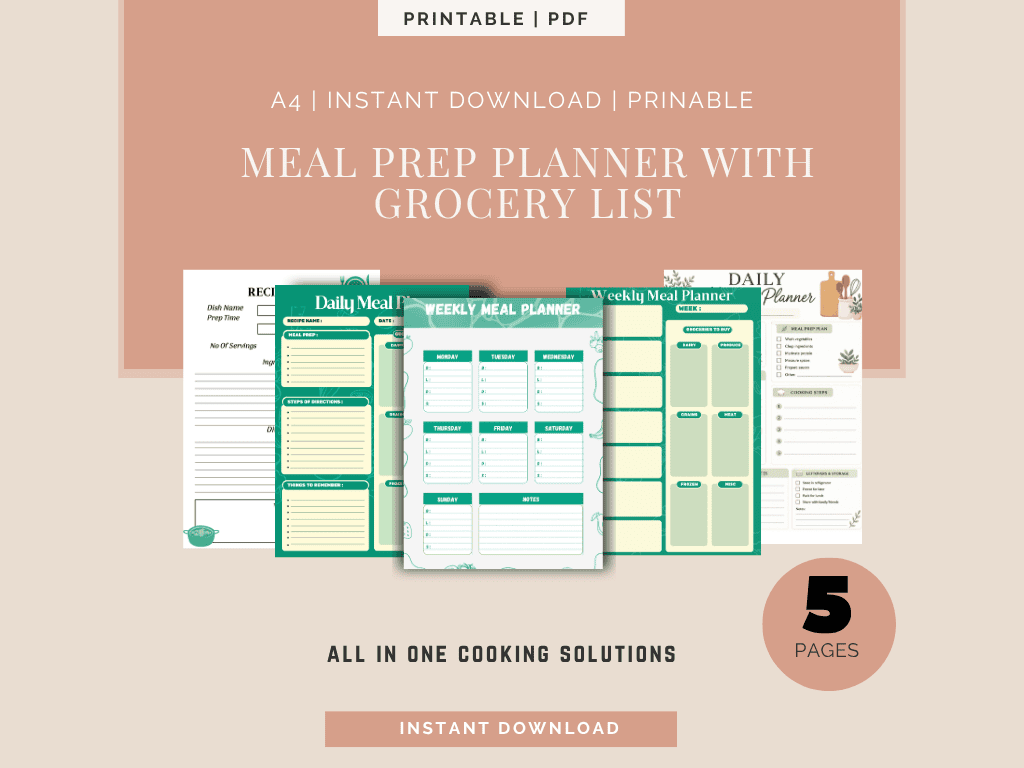
If you enjoy staying organized with printable planners, having everything in one place can make weekly planning much simpler.
A Meal Planner Bundle typically includes pages such as:
- Weekly meal planner
- Monthly meal planner
- Grocery shopping list
- Pantry inventory
- Freezer inventory
- Recipe planner
- Meal prep checklist
- Family favorite recipes tracker
Using reusable printables means you don’t have to create a new plan from scratch every week. You can simply print a fresh page and get started.
Frequently Asked Questions
How long does meal planning take?
Most people can plan their week in about 20–30 minutes once they have a routine.
Is meal planning only for large families?
No. Meal planning works just as well for individuals, couples, and small households.
How many meals should I plan?
Aim for 5–6 dinners each week and leave one flexible night for leftovers or a simple meal.
Can meal planning really save money?
Yes. Planning ahead helps reduce impulse purchases, minimizes food waste, and cuts down on expensive takeout meals.
Final Thoughts
Meal planning doesn’t have to be complicated. A little planning each week can save time, reduce stress, and help you make the most of your grocery budget.
Start with a few simple meals, build a realistic routine, and adjust it as your family’s schedule changes. Over time, meal planning becomes a habit that makes everyday life feel more organized.
And if you’d like a ready-to-use system, a printable Meal Planner Bundle can make the process even easier by keeping your meals, grocery lists, and planning pages all in one place.