Hey there, fellow entrepreneur and dream-chaser! Shah Rukh here, your friendly guide through the often-confusing world of business insurance. Today, we’re tackling a topic that’s super important, yet often misunderstood: General Liability Insurance. Think of it as your business’s essential safety net – the one thing that can protect your hard work from unexpected tumbles.
I’ve seen firsthand how a single unforeseen event can turn a thriving business upside down, especially for small businesses and startups. That’s why I’m so passionate about helping you understand this crucial protection. Don’t worry, we’re not diving into complex legal jargon here. Instead, imagine we’re having a coffee, and I’m just explaining it to you, my friend, in simple, honest terms.
What Exactly is General Liability Insurance? Your Business’s Everyday Shield
At its heart, commercial general liability insurance (often just called GL or CGL) is designed to protect your business from claims of bodily injury or property damage that might occur during your business operations, or as a result of your products or services. It’s the insurance that covers the most common risks a business faces every single day.
Picture this: you run a cozy little cafe. A customer slips on a wet floor and breaks an arm. Or, you’re a talented graphic designer, and while visiting a client’s office, you accidentally spill coffee all over their expensive server. Without general liability insurance, you could be on the hook for medical bills, repair costs, or even legal fees if they decide to sue. That’s where GL steps in, acting as your financial bodyguard.
It’s not just for big corporations; it’s absolutely vital for everyone from a sole proprietorship to an LLC, and yes, even independent contractors and freelancers. It’s a cornerstone of comprehensive business insurance coverage.
What Does General Liability Insurance Actually Cover? The Nitty-Gritty
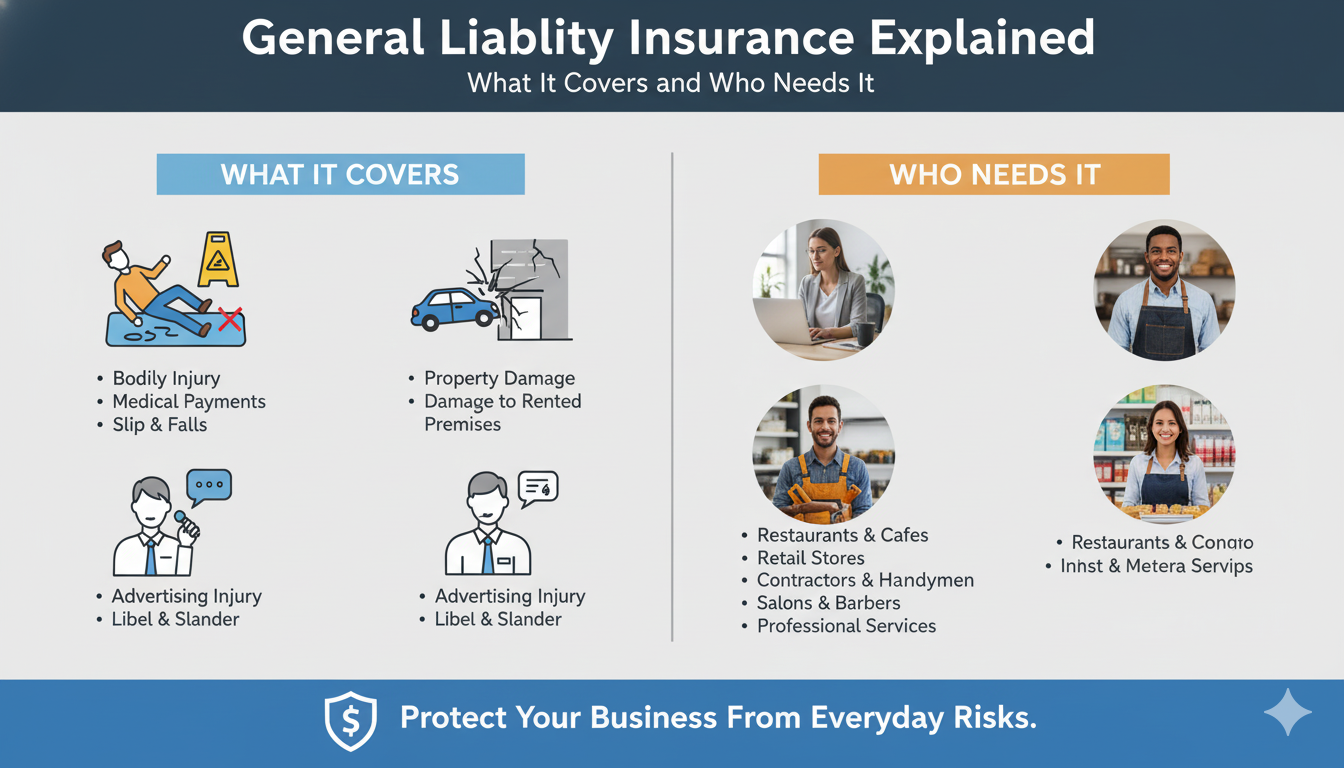
So, what exactly does this superhero policy protect you from? General Liability Insurance typically covers three main categories of claims:
Bodily Injury Coverage
This is probably the most commonly understood part. If someone other than an employee gets hurt on your business premises or due to your business operations, bodily injury coverage can help pay for their medical expenses, rehabilitation, and even lost wages if they can’t work. It also covers legal costs if they sue you.
- Real-life example: A client trips over a loose rug in your office and sprains their ankle. Your GL policy would kick in to cover their emergency room visit and physical therapy.
Property Damage Liability
Accidents happen! If your business operations or an employee accidentally damages someone else’s property, property damage liability coverage will help pay for the repair or replacement. This isn’t about *your* property; it’s about *someone else’s* property that you or your business damages.
- Real-life example: You’re a painter, and while working at a client’s home, you accidentally knock over a can of paint, staining their expensive carpet. GL can cover the cleaning or replacement of the carpet.
Personal and Advertising Injury
This might sound a bit complex, but it’s incredibly important in today’s digital world. Personal and advertising injury coverage protects you from claims like libel (written defamation), slander (spoken defamation), copyright infringement in your advertising, or false arrest (if you wrongly detain someone). Yes, even small businesses need to be mindful of this!
- Real-life example: You run an online store and unwittingly use a copyrighted image on your website for a marketing campaign, leading to a lawsuit from the original artist. Your GL policy could help with legal defense costs and potential settlements.
My Honest Insight (Shah Rukh’s Take): I once had a client, a small consulting firm, who thought they didn’t need this because they just “talked to people.” But an unfortunate comment made by one of their consultants during a public seminar led to a slander claim. Their general liability insurance saved them from a very hefty legal battle. It shows how easily these things can creep up, even when you think you’re being careful.
Who Absolutely Needs General Liability Insurance? (Spoiler: Probably You!)
If you interact with customers, clients, or the public, or operate from a physical location (even a home office), you likely need this protection. Here’s a breakdown:
- Small Businesses (Almost All of Them!): Whether you’re a boutique shop, a consulting firm, or a tech startup, any interaction with the public carries risk. Finding the best small business insurance starts with GL.
- Contractors and Tradespeople: Electricians, plumbers, landscapers, carpenters – if you work on other people’s property, you absolutely need contractors general liability insurance. This protects against damage you might cause while on a job site. Even as an independent contractor liability insurance is non-negotiable.
- Sole Proprietors: Many think that because they’re a “one-person show,” they don’t need it. Wrong! Your personal assets could be at risk without sole proprietorship insurance.
- LLCs (Limited Liability Companies): While an LLC provides some personal asset protection, it’s not foolproof. Liability insurance for LLC adds another crucial layer of defense for the business itself against claims.
- Businesses with a Physical Location: Retail stores, restaurants, salons, offices – anywhere customers visit. This is classic public liability insurance territory.
- Service-Based Businesses: Consultants, coaches, personal trainers – even if you don’t have a storefront, you interact with clients, and accidents (or misunderstandings) can happen.
- Business for Startups: Especially when you’re just getting started, unexpected lawsuits can sink your venture before it even gets off the ground. Business insurance for startups should always include GL.
Shah Rukh’s Encouragement: Don’t view this as an extra cost; view it as an investment in peace of mind. The cost of a lawsuit or a major claim far outweighs the annual premium. It’s about protecting your dream, your livelihood, and your future.
General Liability vs. Other Key Insurance Types: What’s the Difference?
This is where it gets a little tricky, as there are many types of business insurance. Let’s clear up a common confusion:
Professional Liability vs. General Liability
This is a big one! While general liability covers bodily injury, property damage, and personal/advertising injury, professional liability insurance (also known as Errors & Omissions or E&O) covers claims related to professional negligence, mistakes, or failures in your professional service. Think of it as protecting your advice or expertise.
For example, if you’re a marketing consultant and your advice leads to a client losing money, that would fall under professional liability. If your client slips on your office floor, that’s general liability. Many businesses, especially service providers, need both!
Here’s a quick comparison:
| Feature | General Liability Insurance | Professional Liability Insurance (E&O) |
|---|---|---|
| What it Covers | Bodily injury, property damage, personal & advertising injury to third parties. | Negligence, errors, omissions, or failure to perform professional duties. |
| Common Scenario | Client slips and falls in your office. | Client sues because your advice caused financial loss. |
| Who Needs It Most | Almost all businesses interacting with the public. | Service providers (consultants, doctors, lawyers, IT pros, real estate agents). |
| Focus | Physical harm or damage to others. | Professional advice, services, or expertise. |
Business Owners Policy (BOP)
A Business Owners Policy (BOP) is a fantastic option for many small businesses because it bundles several essential coverages into one convenient package. It typically combines general liability insurance with commercial property insurance (which protects *your* business property). Sometimes, it can even include business interruption insurance. A BOP can often be more cost-effective than buying each policy separately.
Understanding the Cost: General Liability Insurance Premiums
“Okay, Shah Rukh, this sounds important, but what’s the general liability insurance cost going to be?” That’s a very valid question! Unfortunately, there’s no one-size-fits-all answer, as premiums depend on several factors:
- Your Industry: A high-risk industry (like construction or roofing) will generally have higher commercial insurance rates than a low-risk one (like a freelance writer).
- Your Business Size and Revenue: Larger businesses with more employees and higher revenues often face greater risk, which can translate to higher premiums.
- Location: Where your business operates can influence rates due to local regulations, population density, and even regional claim trends.
- Coverage Limits and Deductibles: How much coverage you want and how much you’re willing to pay out-of-pocket (deductible) directly impact your premium.
- Claims History: A history of claims can lead to higher rates, while a clean record can help you get more cheap general liability insurance.
The good news is that for many small businesses, general liability insurance is surprisingly affordable, especially when you consider the protection it offers. You can easily get business liability insurance quotes online or through a local agent to compare options. Many providers offer an instant business insurance quote, making it quick and easy to get an estimate for your specific needs.
Practical Tips for Getting the Right Coverage
Finding the right policy doesn’t have to be a headache. Here are my tips:
- Assess Your Risks Honestly: Think about your daily operations. Do you visit clients? Do clients visit you? Do you handle sensitive data? What’s the worst-case scenario that could happen?
- Shop Around and Compare: Don’t just take the first quote. Use online tools to get multiple business liability insurance quotes and compare them. Look at the coverage limits, deductibles, and what’s included.
- Consider a BOP: For many small businesses, a Business Owners Policy offers great value by combining general liability with property insurance.
- Ask Questions: If you don’t understand something, ask! A good insurance professional will be happy to explain comprehensive general liability in detail.
- Don’t Underestimate Your Needs: While you might be tempted by the cheap general liability insurance option, make sure it actually provides adequate coverage for your specific risks. Skimping now could cost you a fortune later.
My Personal Insight: I’ve seen business owners try to save a few dollars by picking the absolute minimum coverage, only to deeply regret it when a significant claim hit. It’s like building a beautiful house but putting on a flimsy roof. You want a strong foundation and robust protection for your hard work!
Conclusion: Protect Your Dream, Plan for Success
So, there you have it – General Liability Insurance explained, I hope, in a way that feels clear and helpful! It’s not just another item on your to-do list; it’s a fundamental component of smart business management. Whether you’re a seasoned entrepreneur or just starting with business insurance for startups, understanding and securing this coverage is a testament to your professionalism and foresight.
You’ve poured your heart and soul into building your business. Don’t let an unexpected accident or claim derail your journey. With the right general liability insurance, you can focus on what you do best, knowing that you have a solid shield against common perils.
Ready to take the next step and secure your peace of mind? Don’t hesitate to reach out to an insurance professional, or start gathering a few instant business insurance quotes online. It’s easier than you think, and the reassurance it brings is absolutely priceless.