Hey there, fellow drivers and smart decision-makers!
Ever found yourself in a situation where you need to drive, but you don’t actually own the car? Maybe you’re borrowing a friend’s vehicle, renting a car for a weekend getaway, or perhaps you’re in a car-sharing program. It’s a common scenario, and one that often sparks a crucial question: “Am I covered if something goes wrong?”
As Shah Rukh, someone who’s spent over five years navigating the twists and turns of insurance, I’ve seen firsthand the peace of mind – and sometimes the costly headaches – that come from understanding your coverage. And let me tell you, when it comes to driving cars you don’t own, there’s a specific type of hero waiting in the wings: Non-Owner Car Insurance.
This isn’t just some fancy term; it’s a vital safety net for many. If you’re an active driver but don’t have your name on a car title, this article is for you. We’re going to break down everything you need to know in simple, friendly language, just like I’d explain it to my best friend. No jargon, just real talk and practical advice. Let’s get started, because protecting yourself on the road is always the smartest move!
What Exactly is Non-Owner Car Insurance? (The Basics, Simplified!)
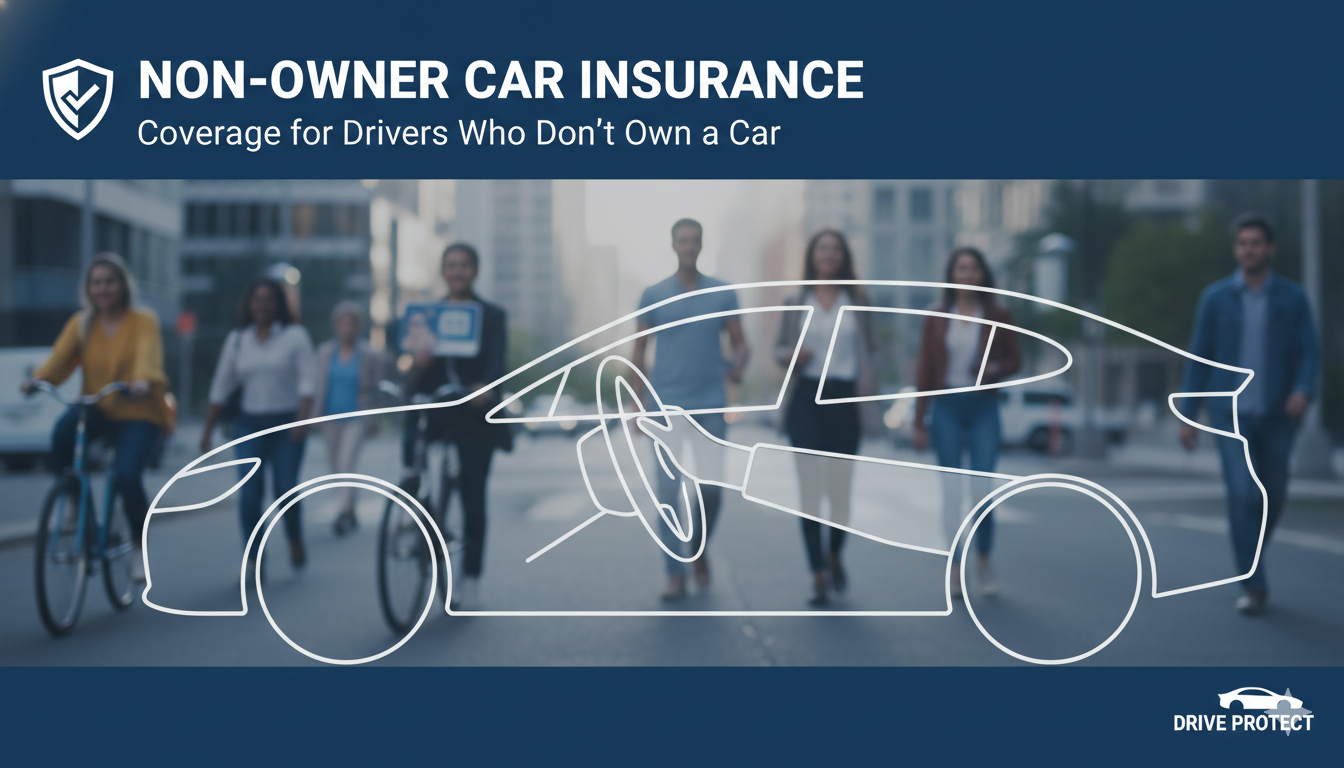
Imagine this: You’re driving your buddy’s car, and oops! A minor fender bender. Who pays for the damage to the other car? What about their medical bills? This is where non-owner car insurance steps in. Simply put, it’s a type of liability insurance that covers you when you’re driving a car you don’t own.
Think of it as personal liability coverage that “follows the driver,” not the car. Unlike a standard auto insurance policy that attaches to a specific vehicle, non-owner insurance is tied directly to you, the individual driver. It’s the perfect solution for auto insurance for drivers without a car.
What it typically covers:
- Bodily Injury Liability: If you cause an accident and injure someone else, this covers their medical expenses.
- Property Damage Liability: If you damage someone else’s car or property (like a fence or mailbox) in an accident, this pays for the repairs.
It’s important to understand that this policy generally doesn’t cover damage to the car you’re driving or your own medical bills. For those, you’d typically look to the car owner’s policy or your own health insurance.
Who Needs Non-Owner Car Insurance? (And Why You Might Be One of Them)
You might be thinking, “Well, I don’t own a car, so I don’t need insurance, right?” Hold on a minute! That’s a common misconception that can lead to big problems. There are several scenarios where this coverage isn’t just a good idea, it’s absolutely essential:
1. The Frequent Borrower
Do you often borrow cars from friends, family, or even neighbors? Maybe you help with errands or carpool. While the owner’s policy usually provides primary coverage, it might not be enough to cover all damages, especially if they have minimal coverage or if you cause significant damage. Your liability coverage for borrowed cars from a non-owner policy acts as secondary coverage, protecting you from potential out-of-pocket costs.
2. The Rental Car Regular
If you frequently rent cars for business or pleasure, you might decline the rental company’s expensive insurance. Your personal non-owner policy can provide primary liability protection, often at a much lower cost than the rental desk. It’s a smart way to get non owner insurance for rental cars without breaking the bank, supplementing or even replacing the need for additional rental car liability insurance from the rental agency.
3. Drivers Needing an SR-22 (The “High-Risk” Category)
This is a big one. If your license has been suspended or revoked due to a DUI, serious traffic violations, or driving without insurance, your state likely requires you to file an SR-22 form to get your license reinstated. An SR-22 isn’t insurance itself; it’s a certification from your insurance company to the state, proving you have coverage. If you don’t own a car, you’ll need non owner SR22 insurance. I’ve helped countless people navigate this, and finding sr22 non owner insurance cost or sr22 bond non owner can be crucial for getting back on the road legally. Yes, it might be categorized as high risk non owner car insurance, but it’s a necessary step.
4. The Smart Business Owner
If your employees occasionally use their personal vehicles for business errands or travel, your business needs protection. Hired and non-owned auto insurance (HNOA) is a type of commercial non-owner insurance that covers your business’s liability when employees drive their personal cars for work, or when your business rents vehicles. This is crucial for safeguarding your assets and is often referred to as commercial non owned auto liability or non owned auto coverage for business. It’s about protecting your company from the risks associated with employees driving business auto insurance for personal vehicles.
The Core of Non-Owner Insurance: Liability, Liability, Liability!
Let’s zoom in on what non-owner insurance *really* does. Its primary purpose is to provide liability insurance for non owners. This means if you cause an accident while driving a car you don’t own, your non-owner policy will cover:
- Bodily Injury to Others: Medical bills, lost wages, and pain and suffering for anyone you injure.
- Property Damage to Others: Repairs or replacement for damaged vehicles or property belonging to others.
It’s your shield against the financial fallout of an at-fault accident. Without it, you could be personally responsible for thousands – or even hundreds of thousands – of dollars in damages. This is why having non owner liability insurance rates sorted out is so important.
What it usually doesn’t cover:
- Damage to the car you’re driving: This would typically fall under the owner’s comprehensive and collision coverage.
- Your own medical expenses: Your health insurance or the car owner’s medical payments/PIP coverage might kick in.
- Theft of the car you’re driving.
Some companies offer a “broad form non-owner insurance” which might include more comprehensive features, but the core remains liability.
Navigating SR-22s with Non-Owner Insurance
Okay, let’s talk about the SR-22 again, because it’s a situation many drivers find themselves in. If you’re required to file an SR-22 but don’t own a car, you absolutely need a non-owner SR-22 policy. This is common for drivers who have had their license suspended due to incidents like a non owner car insurance for DUI or other serious infractions. The state simply wants proof that you, as an individual, are insured whenever you get behind the wheel, regardless of whose car it is.
Finding sr22 non owner insurance cost can feel overwhelming, especially when you’re already dealing with a suspended license. The good news is that many insurance providers offer these policies. Your goal will be to find sr22 insurance non owner cheap that meets your state’s minimum requirements.
Tips for SR-22 Non-Owners:
- Shop Around: Get several non owner sr22 insurance quotes. Rates can vary significantly between companies.
- Be Honest: Always provide accurate information about your driving record.
- Understand the Term: SR-22 requirements usually last for a specific period (e.g., 3-5 years).
- Consider a Bond: In some states, an sr22 bond non owner might be an option, but it’s typically a guarantee rather than actual insurance coverage.
Reinstating your license after a suspension requires patience and diligence. A non-owner SR-22 policy is often the most straightforward path back to legal driving for those without their own vehicle.
Non-Owner Insurance for Businesses: A Smart Move
Businesses, listen up! If your team uses vehicles they don’t own – whether it’s an employee driving their personal car to a client meeting or renting a van for a delivery – your business faces significant liability risks. This is where commercial non owned auto liability insurance becomes indispensable.
This type of coverage, often called hired and non-owned auto insurance (HNOA), protects your business when an employee is involved in an at-fault accident while driving a vehicle not owned by the company but used for business purposes. This includes:
- Employees using their personal cars for work tasks (e.g., sales calls, bank runs).
- Vehicles rented or leased by your business.
Without specific commercial auto insurance non owned coverage, your business could be held responsible for damages and injuries. This can lead to devastating financial consequences. It’s about protecting your business from the risks of business auto insurance for personal vehicles being used on company time.
How Much Does Non-Owner Car Insurance Cost?
Ah, the million-dollar question – or rather, the “how-many-dollars” question! The non owner insurance policy cost is generally more affordable than a standard auto insurance policy because it doesn’t cover physical damage to a specific vehicle. However, various factors influence your non owner liability insurance rates:
- Your Driving Record: A clean record equals lower rates. Accidents or violations, especially a non owner car insurance for DUI, will push costs up.
- State Requirements: Minimum liability limits vary by state, directly impacting premiums.
- Coverage Limits: Opting for higher liability limits (which is often a good idea for better protection) will increase the cost.
- Frequency of Driving: While harder to quantify, if you drive borrowed cars very frequently, it can implicitly impact risk.
- SR-22 Requirement: If you need an SR-22, expect to pay more. This falls under high risk non owner car insurance.
Typically, you can find cheap non owner car insurance for as little as $15-$50 a month, but this can fluctuate wildly depending on the factors above, especially if an SR-22 is involved. Don’t be shy about seeking instant non owner car insurance quotes to get a real-time estimate.
Getting Your Non-Owner Car Insurance Quote (Practical Steps!)
Ready to get covered? It’s easier than you think. Here’s how to get reliable non owner car insurance quotes:
- Gather Your Info: Have your driver’s license number, driving history (any tickets or accidents?), and an idea of the coverage limits you want.
- Contact Several Providers: Don’t just go with the first company. Many major and smaller non owner auto insurance companies offer these policies. Compare at least 3-5 quotes.
- Be Specific: Clearly state you need a “non-owner car insurance policy” or “liability insurance for non-owners.” If you need an SR-22, explicitly mention “non owner SR22 insurance quotes.”
- Online vs. Agent: You can often get quotes online quickly, or if you prefer a human touch, search for “non owner insurance near me” and speak to a local agent. An agent can often help clarify specific state requirements.
- Review the Details: Understand what’s covered, what’s not, and any deductibles or limitations.
Finding a policy that fits your budget and needs is totally achievable. Don’t let the “I don’t own a car” excuse stop you from being a responsible and protected driver!
Shah Rukh’s Top Tips for Non-Owners:
From my years in the insurance world, here are a few honest insights and tips I’d share with anyone considering non-owner car insurance:
- Always Check the Car Owner’s Policy: Before borrowing a car, have a chat with the owner about their insurance. Understand their liability limits and if their policy extends coverage to other drivers. Your non-owner policy will then act as an important secondary layer of protection.
- Don’t Drive Uninsured: This is my golden rule. Even if you’re just driving “for a minute,” the risks are immense. The legal penalties for driving without insurance are severe, and the financial burden of an at-fault accident can be catastrophic. Seriously, a small monthly premium is nothing compared to potential lawsuits.
- Review Annually: Your driving habits might change. Maybe you start renting more, or a friend moves away. Reassess your needs and get fresh non owner car insurance quotes annually to ensure you still have the best and most appropriate coverage.
- Understand State Requirements: Each state has minimum liability requirements. Make sure your non-owner policy meets these.
Being a non-owner driver shouldn’t mean being an unprotected driver. Take control, understand your options, and drive with confidence.
Non-Owner vs. Standard Auto Insurance: A Quick Look
To really drive the point home, here’s a simple comparison of non-owner insurance versus a traditional auto policy:
| Feature | Non-Owner Car Insurance | Standard Auto Insurance |
|---|---|---|
| Primary Coverage Focus | Driver’s liability when operating any non-owned vehicle. | Vehicle’s coverage, including owner’s liability, comprehensive, and collision. |
| Who it’s For | Drivers without their own car; those needing SR-22; frequent renters/borrowers; businesses for HNOA. | Car owners who drive their own registered vehicles. |
| Covers Damage to Car You’re Driving? | ❌ No (typically) | ✅ Yes (with Comprehensive & Collision) |
| Covers Your Injuries? | ❌ No (typically, check health insurance/PIP) | ✅ Yes (with Medical Payments/PIP) |
| Covers Others’ Injuries/Property? | ✅ Yes (Liability) | ✅ Yes (Liability) |
| SR-22 Eligibility | ✅ Yes (Primary solution for drivers without a car) | ✅ Yes (For car owners) |
| Cost | Generally lower than standard policies. | Generally higher due to comprehensive vehicle coverage. |
Conclusion: Drive Smart, Drive Protected!
So, there you have it. Non-owner car insurance might sound niche, but it’s a powerful tool for responsible drivers who don’t have a car of their own. Whether you’re borrowing a car, renting frequently, managing a suspended license, or protecting your business, this coverage is about peace of mind and financial security.
Don’t ever assume you’re fully covered just because the car’s owner has insurance. Your personal liability protection is *your* responsibility, and a non-owner policy ensures you’re never caught off guard.
My advice, as always, is to be proactive. If you fit any of the descriptions we’ve discussed today, take the next step. Invest a little time in understanding your options, compare non owner car insurance quotes, and secure your financial future on the road.
It’s not just about compliance; it’s about being prepared for life’s unexpected turns. Drive safe, and stay covered!
Ready to explore your options? Get your personalized non owner car insurance quotes today and drive with confidence!