Hey there, fellow entrepreneur!
Running a business, big or small, is an incredible journey. It’s filled with passion, hard work, late nights, and the immense satisfaction of building something from the ground up. But let’s be honest, it also comes with its fair share of worries. What if disaster strikes? What if you can’t open your doors tomorrow? What happens to your income, your employees, your dreams?
As Shah Rukh, an insurance expert with over five years of experience (and a few sleepless nights of my own wondering about these very things!), I’ve seen firsthand how quickly a thriving business can face a devastating setback. That’s where a guardian angel for your finances steps in: Business Interruption Insurance. Think of it as your business’s superhero cape, ready to swoop in when things go sideways.

What Exactly is Business Interruption Insurance? (Your Business’s Financial Safety Net)
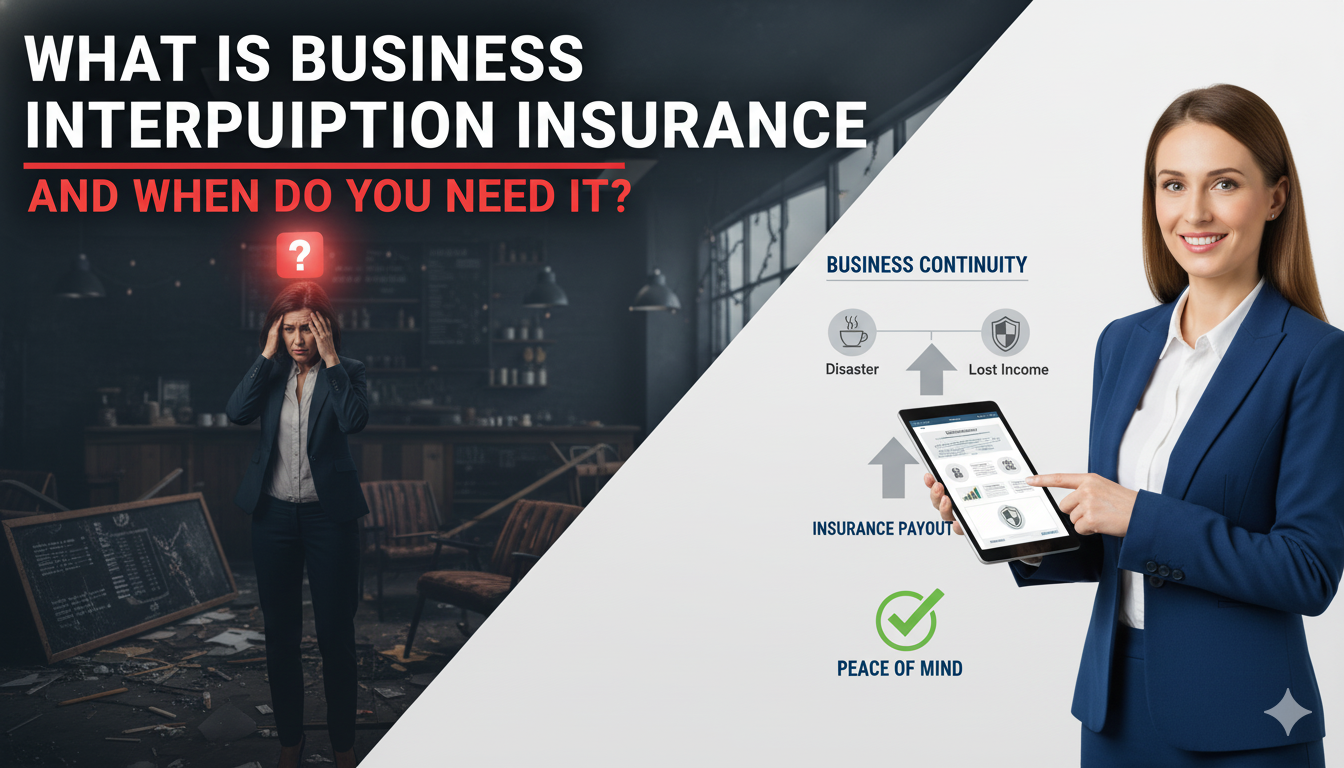
Let’s break it down in simple terms. Imagine your favorite coffee shop. One morning, a pipe bursts, causing significant water damage. They have to close for a month for repairs. During that month, no lattes are sold, no pastries are baked, and no money comes in. But rent, salaries, and other ongoing expenses don’t just stop. Scary, right?
Business Interruption Insurance (sometimes called loss of business income insurance or even profit protection insurance) is designed to cover the income you lose and the extra expenses you incur when your business can’t operate due normally due to a covered peril. It steps in to replace your lost profits and help you pay those fixed costs, allowing you to focus on getting back on your feet instead of drowning in financial stress.
Most often, this coverage is an add-on or an integral part of a larger policy, like your commercial property insurance with business interruption. So, if your property is damaged by a fire, storm, or other covered event, this insurance kicks in to cover the financial fallout of that physical damage.
Why It’s More Than Just “Nice to Have”
I’ve had clients, brilliant entrepreneurs, who thought, “Ah, that won’t happen to me.” Then, a sudden fire or a burst water main changed everything. Without this insurance, some faced bankruptcy. With it, they rebuilt, recovered, and reopened with a renewed sense of purpose. It’s about resilience, my friend.
When Do You Absolutely Need Business Interruption Insurance? (The “Oh No!” Moments)
While we all hope for smooth sailing, the world can be unpredictable. Here are some scenarios where business disruption insurance becomes your best friend:
- Natural Disasters: A fire, severe storm, flood (if covered by a specific flood policy endorsement), or earthquake damages your premises, forcing you to close. This is a classic example of when commercial property and business income coverage saves the day.
- Property Damage: An internal issue like a burst pipe, an electrical fire, or equipment breakdown within your shop renders it unusable. Even something seemingly minor can lead to major downtime.
- Civil Authority Coverage: What if there’s no damage to your property, but a government agency (civil authority) shuts down access to your area due to a public safety concern (like a gas leak, a riot, or a mandated evacuation)? This coverage can help you recover lost income even if your own building is intact. We’ve seen this become increasingly relevant with events requiring commercial riot insurance or widespread public safety actions.
- Supply Chain Disruptions: This is a big one that many business owners overlook. If a key supplier or a customer (on whom your business heavily relies) suffers damage and can’t operate, it can directly impact your income. That’s where contingent business interruption insurance or specific supply chain insurance coverage comes into play, protecting you from losses stemming from disruptions *outside* your direct control.
- Vandalism or Theft: Significant damage from a break-in or vandalism that requires you to close for repairs can also trigger this coverage.
For business interruption insurance for small business owners, this isn’t a luxury; it’s a necessity. You often don’t have the deep cash reserves of a large corporation, making every day of lost income critical.
Understanding the Building Blocks of Business Interruption Coverage
This isn’t a one-size-fits-all policy. It has several key components that determine how it protects you:
- Loss of Business Income: This is the core. It reimburses you for the net profit you would have earned, plus the ongoing operating expenses (like rent, utilities, and employee salaries) that continue even when your business isn’t running.
- Extra Expense Coverage: Imagine your office burns down, but you can quickly set up a temporary space in a rented trailer or co-working space to keep operations going. The cost of renting that space, getting new equipment quickly, or paying overtime to employees to catch up are considered “extra expenses.” This coverage helps you minimize downtime and get back to normal faster.
- Business Interruption Indemnity Period: This is crucial! It’s the maximum length of time your policy will pay for your lost income and extra expenses. Typically, it ranges from 6 to 12 months, but you can often extend it. You need to consider how long it would realistically take to repair your property and resume normal operations. Don’t underestimate this!
- Business Interruption Coverage Limits: This is the maximum dollar amount your insurer will pay out during the indemnity period. It’s vital to set these limits correctly based on your projected annual income and expenses.
Often, you’ll find these components bundled as business income and extra expense coverage within your policy.
What Influences Your Business Income Insurance Cost?
Okay, so you’re convinced you need it. Now, what about the price tag? The business income insurance cost or business interruption insurance rates aren’t fixed. Several factors come into play:
- Your Industry: Some industries are inherently riskier than others. A restaurant might have higher rates than an online consulting firm due to different physical risks.
- Your Location: Businesses in areas prone to natural disasters (hurricanes, wildfires) will generally pay more.
- Your Revenue & Expenses: Higher projected profits and operating expenses mean higher coverage limits, which naturally increase the premium.
- Indemnity Period & Waiting Period: A longer business interruption indemnity period will cost more. Some policies also have a waiting period (often 24-72 hours) before coverage kicks in, which can affect your premium.
- Risk Mitigation Measures: Do you have sprinklers, security systems, or backup generators? These can sometimes lead to discounts.
The best way to get an accurate figure for your specific situation is to request business interruption insurance quotes or business income coverage quotes from reputable providers. Many businesses find it cost-effective to get a comprehensive business owners policy quotes (BOP), which often bundles property, liability, and business interruption insurance together.
Navigating the World of Business Interruption Insurance: Tips from Shah Rukh
As your friendly insurance guru, I can’t stress enough how important it is to be proactive:
- Don’t Guess Your Limits: Seriously, this is critical. Work with an experienced agent to accurately calculate your potential lost income and ongoing expenses. A good agent will use a “business interruption insurance calculator” or similar tools to help you determine appropriate business interruption coverage limits and the right indemnity period. Underinsuring is just as bad as not having insurance at all.
- Read the Fine Print (Seriously): Understand what perils are covered and, more importantly, what isn’t. Some policies might exclude floods or earthquakes unless specifically added. Pay attention to waiting periods and exclusions, especially regarding events like pandemic business interruption insurance, which became a complex issue during COVID-19.
- Review Annually: Your business changes, so your insurance needs change. Review your policy every year with your agent to ensure your coverage still aligns with your current revenue, expenses, and risks.
- Consider Related Coverages: While business interruption covers lost profit, consider business overhead expense insurance for sole proprietors or partners, which directly covers your fixed expenses if *you* (the owner) become disabled. It’s a different beast but important for personal financial security.
- Ask About Extra Expense Coverage: Ensure you have sufficient extra expense coverage. Being able to quickly get back up and running, even temporarily, can save you customers and market share.
Comparing Key Business Interruption Coverages
To give you a clearer picture, here’s a quick comparison of some essential components:
| Coverage Aspect | What It Covers | Why It’s Important |
|---|---|---|
| Loss of Business Income | Replaces lost net profit and ongoing operating expenses (salaries, rent, utilities) during downtime. | Keeps your business financially afloat even when you can’t generate revenue. Essential for survival. |
| Extra Expense Coverage | Covers reasonable costs incurred to quickly resume operations after a covered loss (e.g., temporary relocation, rush orders). | Minimizes the duration of your downtime, helps retain customers, and speeds up recovery. |
| Indemnity Period | The maximum length of time the policy will pay out for losses (e.g., 6, 12, or 24 months). | Ensures you have enough time for repairs, rebuilding, and getting back to full operation without running out of coverage. |
| Civil Authority Coverage | Covers lost income when a government entity restricts access to your area, even if your property isn’t directly damaged. | Protects against unforeseen closures due to external events like emergency evacuations or public safety orders. |
| Contingent Business Interruption | Covers lost income resulting from damage to a key supplier or customer’s property. | Safeguards against disruptions in your supply chain or major revenue streams outside your direct control. |
When the Worst Happens: How to Calculate a Business Interruption Claim
Should you ever need to file a claim, the process involves documenting your lost income. This is why good record-keeping is vital! You’ll typically need to provide:
- Financial statements (profit & loss statements, tax returns) from before and after the incident.
- Records of ongoing expenses.
- Proof of loss (e.g., police reports, fire department reports, repair estimates).
- Projections of what your business would have earned during the interruption period.
Your insurer will work with you to “calculate business interruption claim” based on your policy terms and your financial records. It’s a detailed process, so having an agent you trust and clear financial documentation makes a world of difference.
Final Thoughts: Invest in Peace of Mind
Look, I know insurance isn’t the most thrilling topic, but as a business owner, it’s one of the most important decisions you’ll make. Commercial insurance business interruption coverage isn’t just a policy; it’s an investment in your peace of mind, your employees’ livelihoods, and the future of your entrepreneurial dream.
Don’t wait for disaster to strike. Be prepared, be smart, and protect what you’ve worked so hard to build. Exploring “best business interruption insurance companies” and getting tailored advice is a crucial step for any responsible business owner.
Ready to take the next step? Don’t hesitate to reach out to a trusted insurance professional. They can help you navigate the options and get the right business interruption insurance quotes tailored to your unique business needs.
To your continued success!