Hey there, fellow business owner or aspiring entrepreneur!
It’s Shah Rukh here, and if you’re anything like me, you care deeply about your business, your team, and making sure everything runs smoothly. We pour our hearts and souls into what we do, right? But sometimes, even with the best intentions, the unexpected can happen. And that’s where smart planning, like understanding insurance, becomes your best friend.
Today, we’re going to dive into a topic that might sound a bit dry, but trust me, it’s a silent guardian for your business: Employer’s Liability Insurance. You might have heard about workers compensation insurance, but this is a close cousin that often gets overlooked. I’ve seen firsthand how a lack of understanding here can lead to massive headaches (and bills!) for businesses, big and small. My goal is to break it down for you in a way that’s simple, honest, and truly helpful, just like I’d explain it to a good friend over a cup of chai.
So, let’s pull back the curtain and understand this crucial piece of your business’s safety net.
What Exactly is Employer’s Liability Insurance? (And Why It Matters So Much!)
Imagine this: You’ve got a fantastic team, and you’ve taken all the right steps to ensure their safety. But despite your best efforts, an employee gets injured or becomes ill due to their work, and they believe it’s because you (the employer) were negligent. Maybe a safety protocol wasn’t followed, or equipment was faulty, and they hold you personally responsible beyond what workers compensation insurance typically covers.
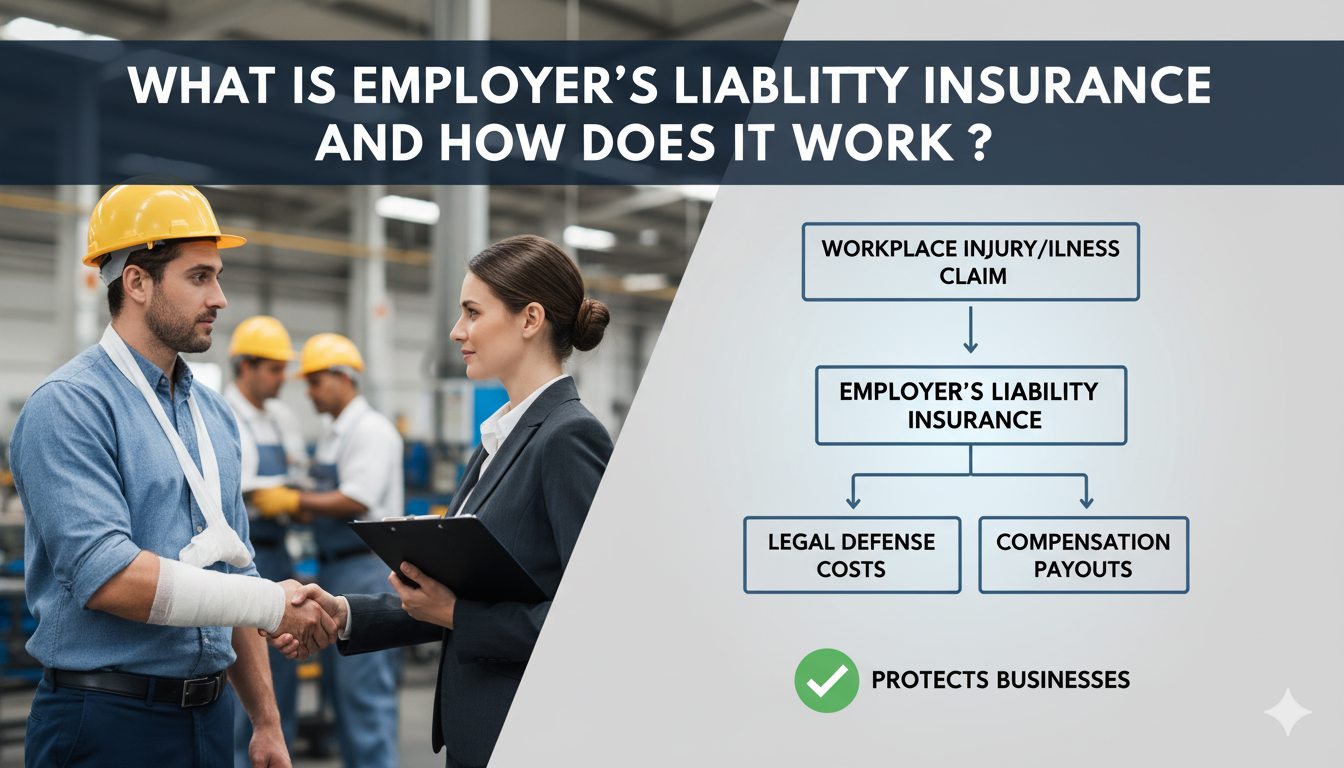
That’s where Employer’s Liability Insurance (ELI) steps in. In a nutshell, it’s designed to protect your business if an employee sues you for damages related to a work-related injury or illness, claiming negligence on your part. It covers the legal costs, settlements, and judgments that might arise from such a lawsuit.
Think of it this way: while workers compensation insurance generally covers an employee’s medical expenses and lost wages for work-related injuries, it typically prevents them from suing you directly for negligence. However, there are specific situations where workers’ comp doesn’t fully protect you from a lawsuit, and that’s precisely the gap ELI fills. It’s often bundled with your workers compensation policy.
Employers Liability vs. Workers’ Comp: Understanding the Difference
This is probably the most common point of confusion, and for good reason! Both relate to employee injuries, but they serve different purposes. Here’s a quick comparison to make it crystal clear:
| Feature | Workers’ Compensation Insurance | Employer’s Liability Insurance |
|---|---|---|
| Primary Purpose | To provide benefits (medical care, lost wages) to employees for work-related injuries/illnesses, regardless of fault. | To protect the employer against lawsuits from employees who claim negligence led to their work-related injury/illness. |
| Who It Protects | The employee. | The employer (your business). |
| Typical Coverage | Medical expenses, rehabilitation, lost wages, death benefits. | Legal defense costs, judgments, settlements, court fees if an employee sues. |
| Legal Basis | “No-fault” system: employee receives benefits without proving employer negligence, but usually forfeits the right to sue. | Covers claims where the employee alleges employer negligence (e.g., unsafe conditions, faulty equipment, inadequate training). |
| Usually Mandated? | Yes, legally required in most states for businesses with employees (with some exceptions like certain `workers compensation exemptions`). | Often included with a workers’ comp policy, but its specific need can vary by state and business risk. |
As you can see, they work hand-in-hand. Workers’ comp handles the immediate aftermath for the employee, while ELI steps in if the employee decides to take legal action against your business for negligence. Without ELI, even if you have workers’ comp, your business could be left completely exposed to a potentially devastating lawsuit.
How Does Employer’s Liability Insurance Work? A Real-Life Scenario
Let’s imagine a situation. My friend, Priya, owns a small catering company. One day, a kitchen assistant, Rohan, slips on a wet floor that wasn’t properly marked and sustains a serious back injury. Rohan receives his medical bills and lost wages through Priya’s workers compensation policy.
However, Rohan later alleges that Priya’s company had a history of not properly cleaning up spills in a timely manner and failing to install appropriate non-slip mats, leading directly to his injury. He decides to file a lawsuit against Priya’s catering company, claiming negligence. This is where employers liability lawsuit coverage becomes vital.
Priya’s Employer’s Liability Insurance would then kick in. It would:
- Cover the cost of her legal defense: Lawyers aren’t cheap, and these cases can drag on.
- Pay for any settlements or judgments: If Priya’s company is found liable or they decide to settle out of court, the insurance would cover those costs up to the policy limits.
Without ELI, Priya would be paying for all these expenses directly out of her business’s pocket, which could easily bankrupt a small business. It’s truly a financial lifesaver.
What Does Employer’s Liability Insurance Typically Cover?
While policies can vary, ELI generally covers:
- Third-Party Over Actions: This is when an employee sues a third party (e.g., a machine manufacturer) for their injury, and that third party then sues the employer for contribution or indemnity.
- Dual Capacity Lawsuits: If an employer acts in a capacity other than just an employer (e.g., manufacturing a defective product that injures an employee).
- Loss of Consortium: Claims made by an employee’s spouse for damages resulting from the employee’s injury (e.g., loss of companionship).
- Consequential Bodily Injury: Claims made by a family member who suffers emotional or physical harm as a result of an employee’s injury.
- Legal Defense Costs: Regardless of the outcome, the policy pays for your legal team.
Who Needs Employer’s Liability Insurance? (Spoiler: Most Businesses!)
If your business has employees, you likely need Employer’s Liability Insurance. While workers compensation exemptions exist for very specific situations (like sole proprietors or partners in some states), if you’re hiring staff, you’re exposed to this risk.
- Small Businesses: Don’t think you’re immune just because you’re small! In fact, a single lawsuit could be more catastrophic for a small business than a large corporation. That’s why considering workers comp insurance for small business alongside ELI is crucial.
- LLCs and Corporations: Even if your business structure provides some liability protection, a serious lawsuit can still impact your business’s assets and reputation. Liability insurance for LLCs and corporations is paramount.
- Businesses with High-Risk Environments: Construction, manufacturing, or any business where physical labor is involved might have a higher probability of injuries.
- Any Business with Staff: From office-based companies to retail stores, the risk of negligence claims exists wherever people work. This also extends to considering staff liability insurance for your specific operations.
Even if you primarily work with independent contractors, while they typically handle their own insurance, understanding the nuances of independent contractor liability insurance and how it relates to your own exposures is smart business.
Important Considerations for Your Employer’s Liability Coverage
Getting the right coverage isn’t just about ticking a box; it’s about making informed decisions to truly protect your hard work.
Employer Liability Coverage Limits
One of the most critical aspects is choosing appropriate employer liability coverage limits. These limits dictate the maximum amount your insurance will pay for legal costs, settlements, or judgments. Standard limits are often around $100,000 per accident, $100,000 per employee for disease, and $500,000 aggregate for disease. However, depending on your industry, number of employees, and perceived risk, you might need higher limits.
From my experience, underinsuring here is a common and costly mistake. Don’t just go for the minimum; think about the worst-case scenario. If a major lawsuit exceeds your limits, you’re on the hook for the rest.
Employers Liability Insurance Cost
The employers liability insurance cost isn’t a fixed number. It varies based on several factors:
- Industry: Higher-risk industries (e.g., construction) will naturally pay more than lower-risk ones (e.g., office work).
- Number of Employees: More employees generally mean more potential risk.
- Claims History: A history of past claims can increase your premiums.
- Payroll: Premiums are often calculated as a percentage of your total payroll.
- State Regulations: Insurance laws and rates vary significantly by state.
When you’re looking for small business workers comp rates or a general employers liability insurance quote, be prepared to provide detailed information about your business to get an accurate estimate.
Getting a Quote
The best way to figure out your specific costs and needs is to get business insurance quotes. Don’t just stop at one! Compare offers from different business insurance companies. This is where a little effort can save you a lot of money and ensure you have comprehensive protection.
Working with a Commercial Insurance Broker
I cannot stress this enough: work with a good commercial insurance broker. Seriously. Just as you wouldn’t DIY your taxes (unless you’re an accountant!), navigating the complexities of commercial insurance liability, including ELI, can be overwhelming. A skilled broker understands the nuances of different policies, can help you compare workers compensation insurance quotes, find the best rates for your employers liability insurance cost, and ensure you have no gaps in coverage. They are your advocate and can be invaluable.
Beyond Employer’s Liability: Other Essential Business Insurances
While we’re focusing on Employer’s Liability today, it’s part of a broader picture of protecting your business. As a responsible business owner, you should also be familiar with:
- Business Liability Insurance: Often refers to Commercial General Liability Insurance (CGL), which covers claims of bodily injury, property damage, and personal injury (e.g., libel, slander) to third parties (not your employees). Understanding general liability insurance cost is a separate but equally important endeavor.
- Professional Liability Insurance: Also known as Errors & Omissions (E&O) insurance, this is crucial for service-based businesses to protect against claims of negligence, errors, or omissions in the professional services you provide.
- Commercial Umbrella Insurance: Provides an extra layer of liability protection above and beyond the limits of your primary general liability, auto, and employer’s liability policies. It’s excellent for significant lawsuits that exceed your underlying policy limits.
- Business Indemnity Insurance / Corporate Liability Insurance: These are broad terms that can encompass various forms of protection for your business against financial loss due to claims of negligence, errors, or other wrongful acts.
The right combination of these can truly create the best small business insurance package tailored for your unique operations.
Shah Rukh’s Personal Insight & Practical Tips
Look, running a business is hard work. You’re juggling a million things, and insurance can often feel like just another chore. But from my years of experience, I’ve seen businesses crumble because they didn’t have the right protection.
Here’s my honest advice:
- Don’t Assume Anything: Just because you have workers’ comp doesn’t mean you’re fully covered. Always ask your broker specifically about your Employer’s Liability coverage.
- Review Annually: Your business changes. Your payroll grows, you add new equipment, you enter new markets. Review your insurance policies, including your employer liability coverage limits, annually with your broker to ensure they still meet your needs.
- Prioritize Safety: The best “insurance” is always prevention. Invest in proper safety training, maintain equipment, and create a culture of safety. This not only protects your employees but can also reduce your premiums and the likelihood of claims.
- Ask Questions: There are no stupid questions when it comes to insurance. If you don’t understand something, ask your broker to explain it until it clicks. That’s what they’re there for!
I know it can feel like a lot of information, but taking the time to understand these protections is one of the smartest investments you can make in your business’s future. It gives you peace of mind, allowing you to focus on what you do best: growing your business and serving your customers.
Conclusion: Your Business Deserves This Protection
Employer’s Liability Insurance isn’t just a legal requirement or another line item on your budget; it’s a fundamental safeguard for your business’s financial stability and reputation. It stands as a crucial defense against the unforeseen, allowing you to operate with confidence, knowing that if an employee-related lawsuit arises from alleged negligence, you have a strong partner by your side.
Don’t let the complexities of insurance deter you. Embrace the understanding of policies like ELI as a testament to your commitment to both your employees and the longevity of your business. Take the initiative, get those business insurance quotes, and ensure your business is protected. Your peace of mind, and your future, are worth it.
If you’re unsure about your current coverage or need help finding the right policy, reach out to a trusted insurance professional. They can help you navigate the options and secure the protection your business truly deserves.