
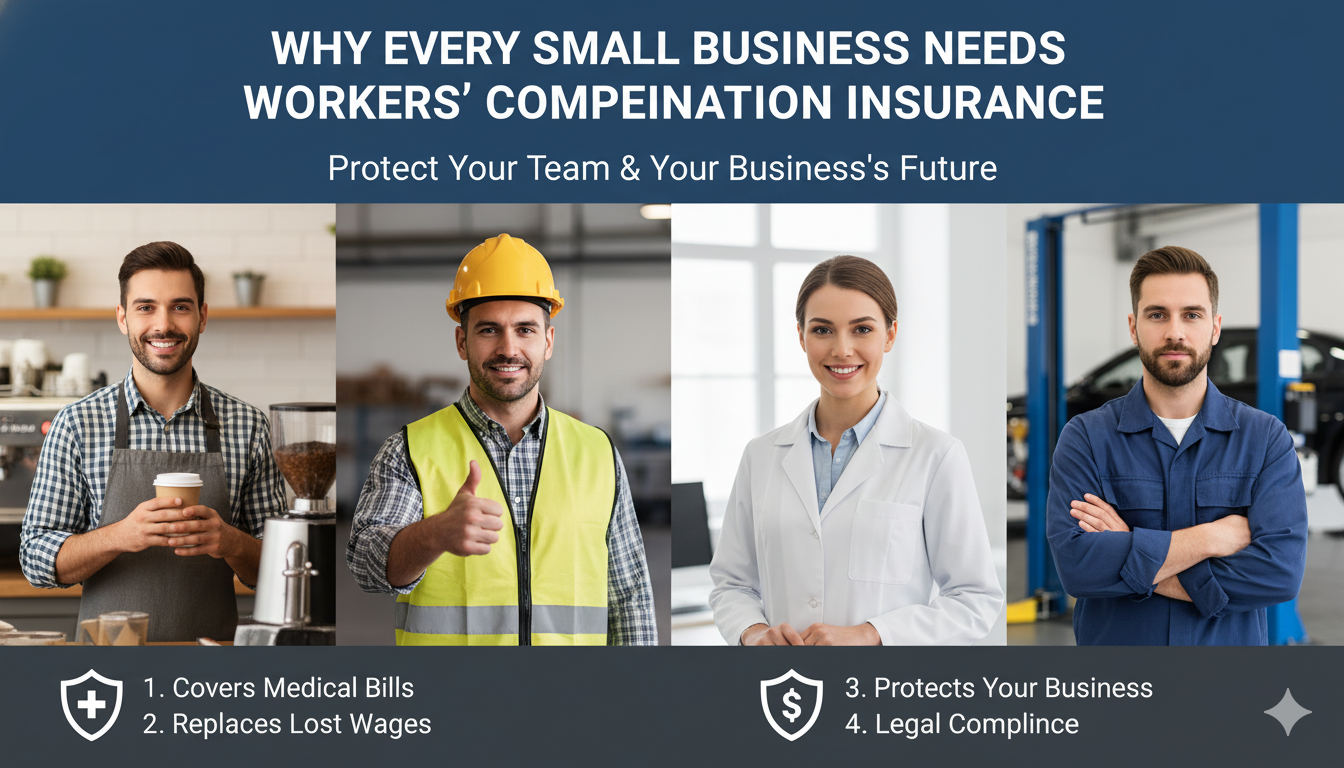
Hey there, fellow entrepreneur! Running a small business is exhilarating, isn’t it? It’s a roller coaster of passion, late nights, and the incredible satisfaction of building something from the ground up. But amidst the excitement of chasing your dreams, there’s a vital piece of the puzzle that often gets overlooked or misunderstood: Workers’ Compensation Insurance.
I get it. As someone who’s been deeply involved in the world of insurance for over five years, watching businesses big and small navigate their risks, I’ve seen firsthand how overwhelming it can feel. You’re probably thinking, “Another expense? Another piece of paperwork?” Believe me, I understand the squeeze on your budget and your time.
But here’s the honest truth, from my perspective as Shah Rukh, your friendly insurance guide: Workers’ comp isn’t just a legal requirement; it’s a foundational safeguard for your business and the amazing people who help you build it. It’s peace of mind wrapped up in a policy, and it’s far more crucial than you might realize.

What Exactly Is Workers’ Compensation Insurance, Anyway?
Let’s strip away the jargon and get to the heart of it. Imagine one of your employees, a valued member of your team, slips and falls at work, breaking their arm. Or perhaps they develop carpal tunnel syndrome from repetitive tasks. These things happen, even in the safest environments.
Workers’ compensation insurance is designed to step in during these exact scenarios. It’s a type of business insurance that provides medical benefits and wage replacement for employees who become injured or ill as a direct result of their job. In exchange for these benefits, the employee typically gives up their right to sue their employer for negligence. It’s a win-win: your employee gets care without fighting, and your business avoids potentially ruinous litigation.
More Than Just a Legal Requirement
While almost every state mandates it (we’ll talk about workers compensation laws by state in a bit), thinking of it only as a legal hurdle misses the point. It’s an ethical commitment to your team. It tells them, “I value your well-being, and if something goes wrong, I’ve got your back.” That kind of trust builds loyalty, which is priceless for any small business.
The Big Why: Protecting Your Team, Protecting Your Dream
Let’s dive deeper into why this isn’t just a checkbox, but a cornerstone for your business’s stability and growth.
Financial Lifeline for Injured Employees
Accidents are unpredictable. If an employee gets hurt on the job, workers’ comp helps cover:
- Medical Expenses: Doctor visits, hospital stays, medication, therapy, and rehabilitation. These costs can quickly skyrocket, and without insurance, they could fall on your employee or, worse, on your business.
- Lost Wages: If an employee needs time off to recover, workers’ comp can provide a portion of their lost income, ensuring they can still pay their bills while healing.
- Disability Benefits: For severe injuries leading to temporary or permanent disability.
- Death Benefits: In tragic cases, it provides financial support to the employee’s family.
Imagine the relief an employee feels knowing their medical bills are covered and their family won’t suffer financially because of an accident at work. That’s the human impact of good coverage.
Shielding Your Business from Costly Lawsuits
This is where workers’ comp truly becomes your business’s superhero. Without it, an injured employee could potentially sue your business directly for medical costs, lost wages, and pain and suffering. A single lawsuit, regardless of its merit, can drain your resources, reputation, and spirit.
I’ve witnessed small businesses crumble under the weight of such legal battles. Commercial general liability insurance covers third-party bodily injury or property damage, but it won’t cover employee injuries. That’s where workers’ comp steps in, acting as your primary shield, protecting your assets and your future.
Fulfilling Your Legal & Ethical Obligations
Most states require businesses with even one employee to carry workers’ compensation. While the specifics, including exceptions for workers comp for self employed or sole proprietors, can vary wildly by workers compensation laws by state, ignoring these mandates carries severe consequences. Penalties can include hefty fines, personal liability for medical costs, and even criminal charges. Trust me, it’s not a risk worth taking.
Is It Really Necessary for My Small Business? (Probably Yes!)
You might be thinking, “But I only have a couple of employees,” or “My business is low-risk.” While those factors influence your small business workers comp rates, they rarely negate the need for coverage.
Understanding Small Business Insurance Requirements
The rules can be a bit of a maze, especially if you’re a new business owner. Here’s a quick look:
- Employee Count: Many states require workers’ comp once you hire your first employee. Some have thresholds (e.g., 3 or 5 employees), but it’s always safer to check your specific state’s laws.
- Business Structure: Whether you’re a sole proprietorship, partnership, or an LLC can affect requirements. For example, workers compensation insurance for LLC members might be optional for owners but mandatory for employees.
- Contractors vs. Employees: This is a big one! If you hire independent contractors, you might think you’re exempt. However, if a state deems a “contractor” to be an “employee” under certain circumstances (which happens!), you could be on the hook. This is why many businesses that hire workers comp for contractors often opt for coverage, or require their contractors to provide proof of their own policies.
- Exemptions: In some states, certain industries or very small businesses might have specific exemptions. However, even if legally exempt, the liability risk remains.
The takeaway? Don’t assume. Always verify your specific small business insurance requirements.
The Cost of Not Having It
Ignoring workers’ comp isn’t saving money; it’s gambling with your business’s future. The potential costs of not having coverage far outweigh the premiums:
- Fines and Penalties: State agencies can impose steep daily fines for non-compliance. These can accumulate quickly.
- Personal Liability: You, as the business owner, could be held personally responsible for an injured employee’s medical bills and lost wages. Your personal assets—your home, your savings—could be at risk.
- Lawsuits: Without workers’ comp, your business is exposed to direct lawsuits from injured employees, which can be devastating.
- Loss of Business Licenses: Some states can revoke your business license for non-compliance.
- Reputational Damage: News of your business failing to care for an injured employee can severely harm your brand and make it hard to attract good talent.
Suddenly, the premiums don’t look so bad, do they?
Demystifying the Cost: What to Expect
One of the biggest concerns I hear is, “How much will this cost?” It’s a fair question, and thankfully, it’s often more affordable than small business owners anticipate.
Factors Influencing Small Business Workers Comp Rates
The cost isn’t one-size-fits-all. Several factors play a role in determining your workers compensation insurance average cost and ultimately, your specific quote:
- Industry Classification: This is the biggest factor. A construction company (higher risk) will pay more per employee than a marketing firm (lower risk). Each job classification has a unique rate code.
- Payroll: Rates are typically calculated per $100 of payroll. The more you pay your employees, the higher your premium will likely be. This influences the workers comp insurance cost per employee.
- Claims History: A history of workplace injuries will lead to higher premiums, while a clean record can help secure more favorable small business workers comp rates.
- State Laws: As mentioned, rules vary by state, affecting how rates are set and regulated.
- Experience Modification Rate (Mod Rate): For established businesses, an “e-mod” is a factor that adjusts your premium based on your actual claims experience compared to other businesses in your industry.
Finding Affordable Coverage
Even if your industry is considered high-risk, there are ways to manage costs and find cheap workers compensation insurance:
- Prioritize Safety: Implementing robust safety protocols and training programs reduces accidents, which can lower your mod rate over time.
- Shop Around: Don’t settle for the first quote! Different workers comp insurance companies offer varying rates. Getting multiple workers compensation insurance quotes is essential.
- Consider a Bundle: Many insurers offer discounts when you bundle different policies, such as a general liability and workers comp bundle. This could also include your business owners policy quotes (BOP) which often combines general liability, property insurance, and business interruption insurance.
- Online Quotes: For convenience and often competitive pricing, you can buy workers comp insurance online and get instant business insurance quotes from various providers. This allows for a quick workers comp policy comparison.
To help illustrate the different types of protection, here’s a quick comparison of common business insurance policies:
| Insurance Type | What It Primarily Covers | Who Needs It Most | Key Keywords/Considerations |
|---|---|---|---|
| Workers’ Compensation Insurance | Employee injuries or illnesses sustained on the job (medical bills, lost wages). | Any business with employees (often legally required). | workers compensation insurance quotes, small business workers comp rates, workers comp for contractors, workers comp insurance cost per employee |
| Commercial General Liability (CGL) | Third-party bodily injury, property damage, advertising injury. | Almost all businesses interacting with the public or other businesses. | commercial general liability insurance, business liability insurance cost, general liability and workers comp bundle |
| Professional Liability Insurance (E&O) | Claims of negligence, errors, or omissions in professional services. | Service-based businesses (consultants, designers, therapists, etc.). | professional liability insurance |
| Business Owners Policy (BOP) | Combines General Liability, Commercial Property, and Business Interruption. | Small to medium-sized businesses looking for comprehensive protection. | business owners policy quotes, best small business insurance 2025 (as a comprehensive option) |
Navigating Your Options: Getting Started
Feeling a bit clearer? That’s my hope! Now, let’s talk about how you can actually get this crucial coverage without losing your mind.
Where to Get Workers’ Comp Insurance
You have a few avenues:
- Independent Insurance Agents/Brokers: This is often my top recommendation for small businesses. An independent agent works with multiple workers comp insurance companies, helping you compare various policies and rates to find the best fit for your specific needs. They can offer personalized advice and often know the nuances of workers compensation laws by state.
- Direct Insurers: You can go directly to large insurance companies. This can sometimes be efficient, especially if you already have other policies with them.
- Online Platforms: Many online platforms specialize in instant business insurance quotes, allowing you to quickly compare and buy workers comp insurance online. This is great for those who are comfortable with digital processes and want to compare cheap workers compensation insurance options.
Bundling for Better Value
As I mentioned earlier, bundling can be a smart move. When you combine policies like your general liability with workers’ comp, you often get a discount. Look for a general liability and workers comp bundle to save money and simplify your insurance management. Many insurance providers are evolving their offerings, aiming to provide the best small business insurance 2025 packages that cater to diverse needs.
Also, don’t forget about your business liability insurance cost in general. A holistic approach to your business insurance needs, looking at all types of coverage together, can save you money and headaches in the long run.
Conclusion: Your Business, Protected and Thriving
Running a small business is an incredible journey, and protecting your venture, your employees, and yourself is paramount. Workers’ compensation insurance isn’t just another item on your to-do list; it’s a strategic investment in the stability and longevity of your dream.
It shields you from financial disaster, ensures your dedicated team receives care when they need it most, and helps you meet your legal obligations with confidence. Don’t let the thought of complexity or cost deter you. In my experience, the peace of mind it brings is truly invaluable.
So, take that crucial step today. Explore your options, compare workers compensation insurance quotes, and make sure your small business is not just growing, but growing safely and securely. You’ve worked too hard to leave it to chance!
Ready to take the next step? Reach out to a trusted insurance professional or get some instant quotes online to understand your options and secure your business’s future.